Challenge
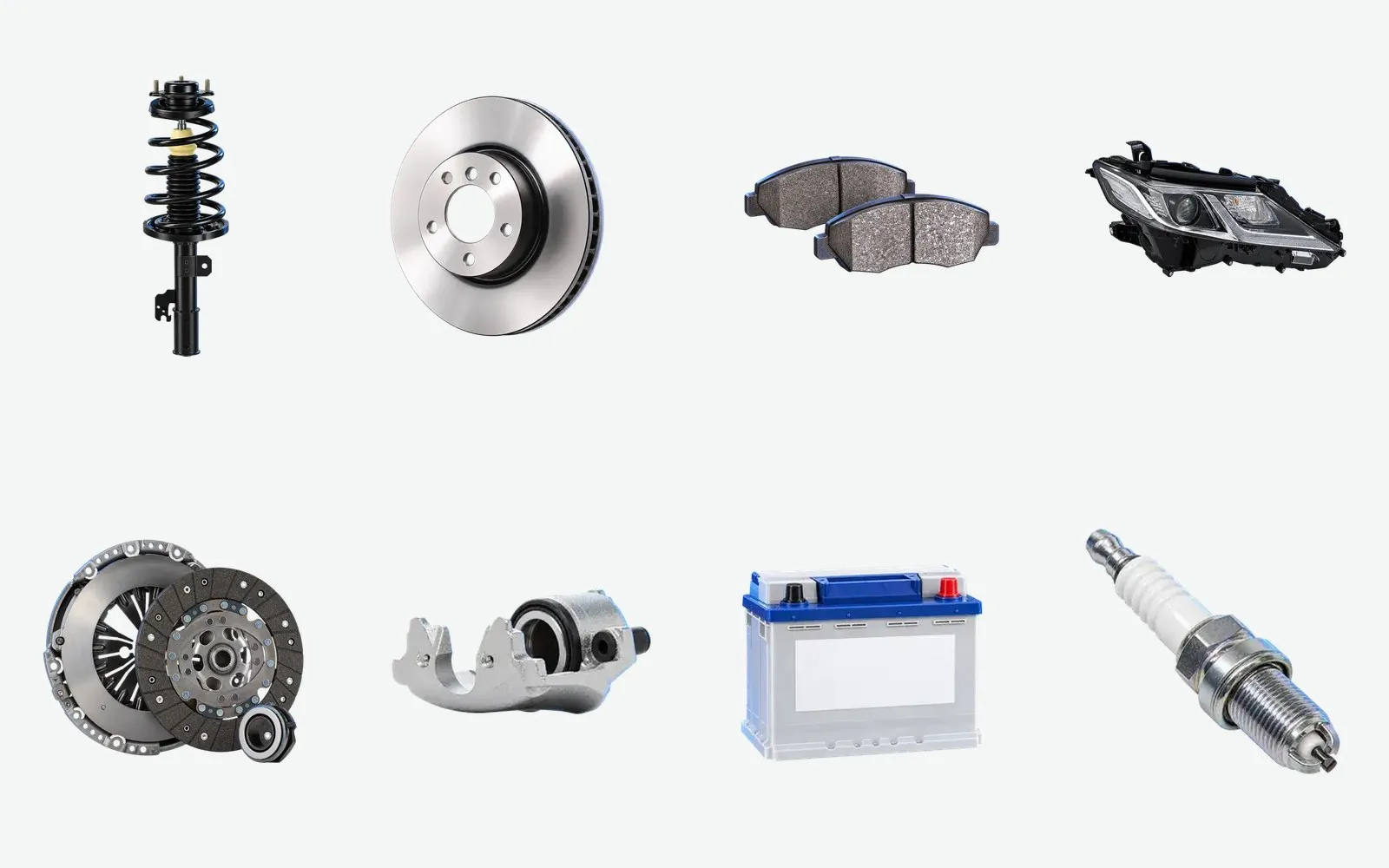
Generated product images tend to drift. Each one comes out at a different scale, angle and light, with stray objects or text, so a catalogue built from them looks random. Two businesses needed product images that read as one set: an auto parts retailer and a food producer.
Approach
Instead of tuning images one by one, I wrote a specification per series and generated against it.
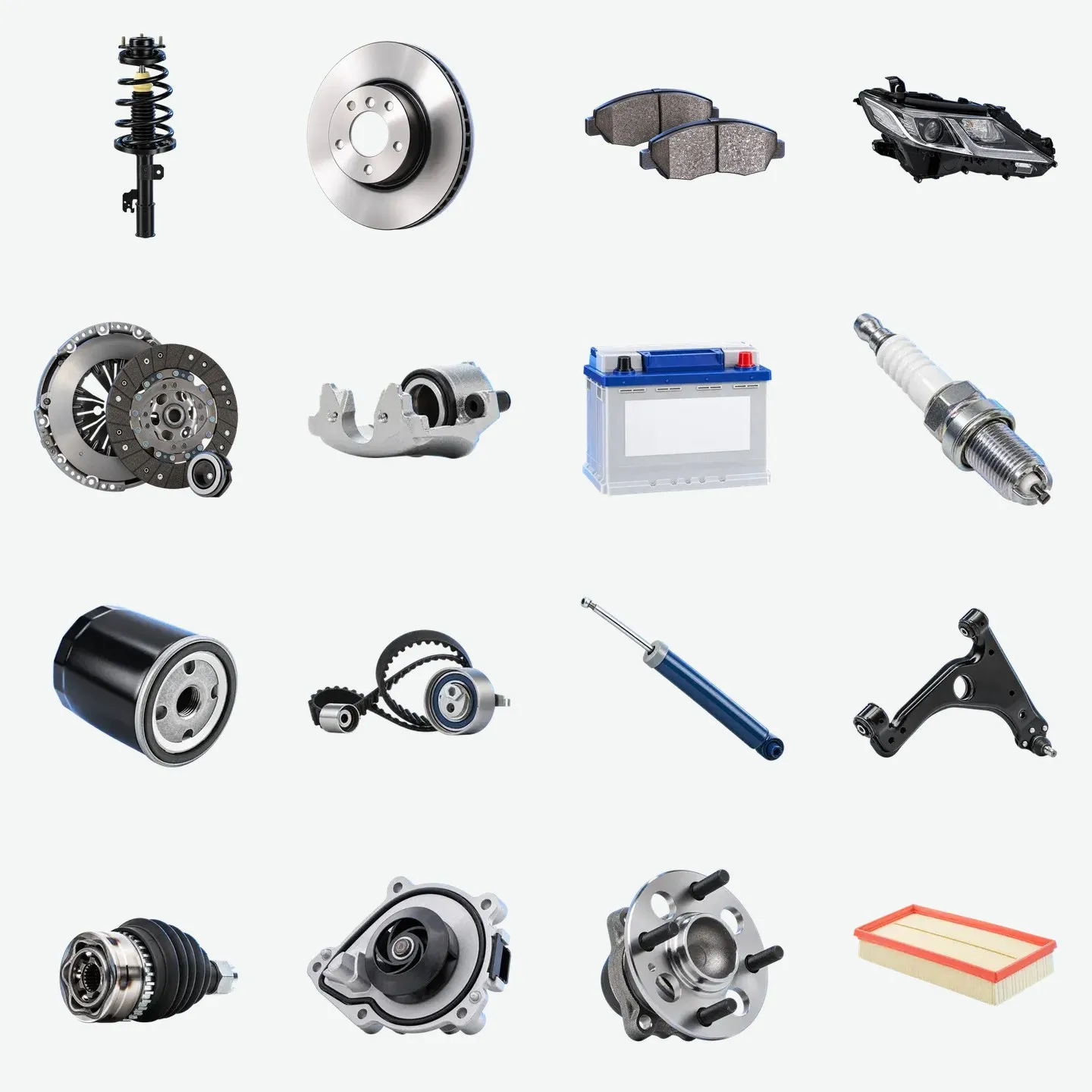
Auto parts. A list of 24 product specifications: brake discs and pads, suspension struts, spark plugs, filters, batteries, belts, bearings, shock absorbers, water pumps, calipers and more. The standard:
- square PNG, soft studio light;
- a blue rim light in the brand colour #0094FE;
- no logos or text on the product;
- at least 12% free space around the item.
Food products. Series of frozen products, meat, vegetables, berries, drinks and ready meals, prepared as single squares, 2×2 grids, 4×2 sheets and 3:2 horizontal compositions. The standard: one scale across the series, a camera angle of about 45°, a clean white background, soft studio light, a natural shadow and nothing in the frame except the product.
In use
The auto parts images now run on the client’s parts lookup page.
Result
Both businesses got a reusable standard: new products can be added later and still match the rest of the catalogue. This is the kind of work behind AI creative production.